
Products · Roller Blinds
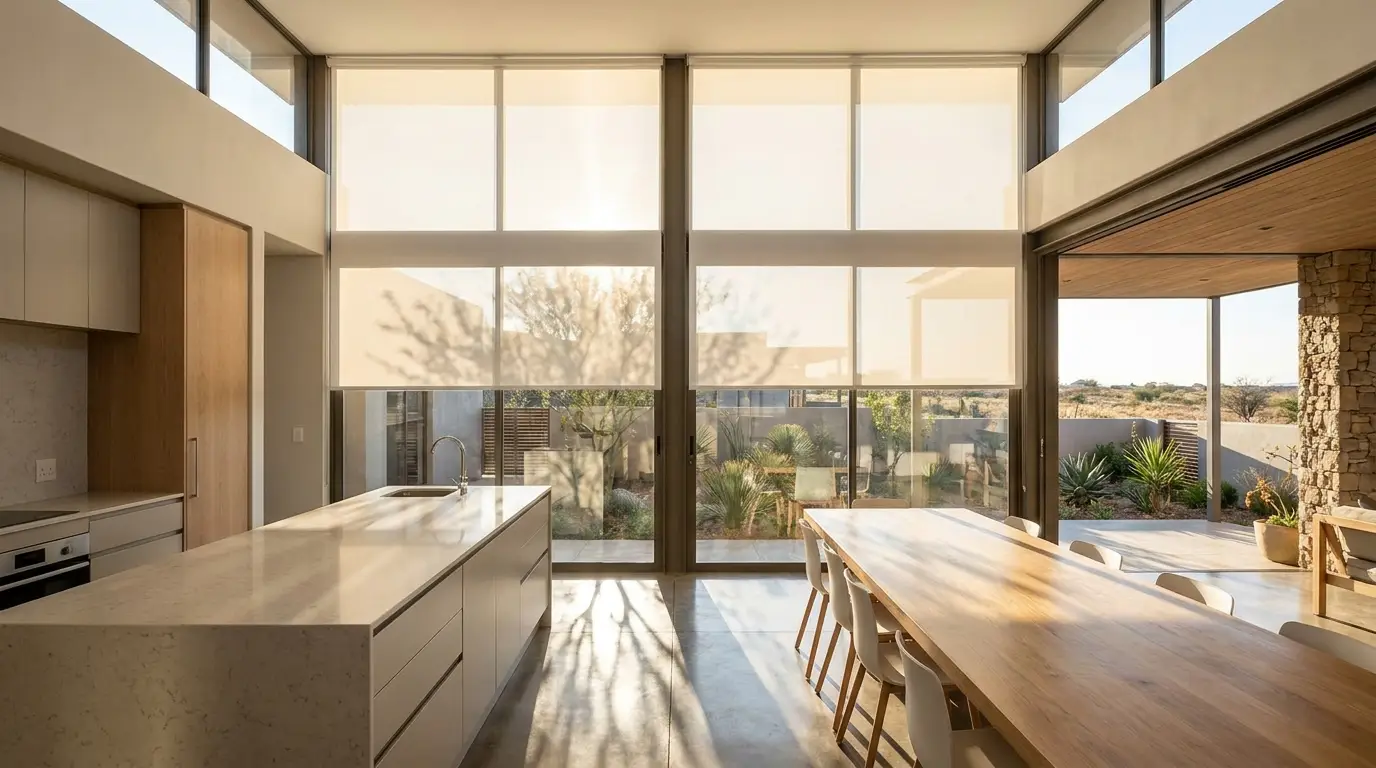
Roller blinds, decided window by window.
Fabric on a tube, cut to the millimetre. Simple hardware — but in a Somerset West house the right fabric changes from one wall to the next, and that choice is the whole job.
Three questions settle the fabric
We don't walk in with a standard spec. Every window gets the same three questions, and the answers pick the fabric for you.
- What does the glass look at? A run down to False Bay or up at the Helderberg wants sunscreen fabric — glare and UV cut hard, view still there. A boundary wall two metres away doesn't need the view kept; a soft light-filter or blockout does more for the room.
- Who's in the room after dark? Sunscreen works like a one-way mirror: it reverses at night once the inside lights go on. Bedrooms, bathrooms and any streetside room need blockout or a double roller behind that view fabric.
- Which way does the wall face? Bay-side glass here takes its beating from mid-afternoon; the mountain side gets gentler morning light. The hardest-working elevation gets the tighter weave — often a different openness than the room next door.
Rooms that answer yes to both a view and a bed get the double roller: sunscreen and blockout sharing one bracket, run independently. Daytime keeps the mountain in the window. Night drops the room to properly dark, whatever the estate's security lighting is doing outside.
Worth knowing
Judge sunscreen swatches at the actual window, in afternoon light. A weave that reads perfectly in a showroom can sit far darker against the glare coming off the bay — which is exactly why the sample book travels to you, not the other way round.
What the Helderberg basin does to the spec
Two local habits shape almost every roller quote we write. The first is orientation: stands across Somerset West are laid out for the view, so the biggest glass regularly faces the hardest light, and a plain blockout would solve the glare by deleting the reason you bought the house. Sunscreen carries those windows; blockout is kept for sleep.
The second is the south-easter. In season it hauls fine dust off the mountain and through every gap in the house, and a textured, loosely woven fabric shows it first. We lean toward smooth, wipeable weaves on doors and openable windows — a two-minute wipe-down instead of a fabric that slowly goes grey.
One more thing estate owners like hearing: a roller blind lives entirely inside the glass line. Erinvale's design committee, and the others along this belt, have no say over it — nothing visible changes on the outside of the house, so there's no submission to make.
Chain, spring or motor
Control is chosen per window, not per house.
- Chain-operated, with a child-safe tensioner anchored to the wall on every install
- Spring-assist for doors you walk through twenty times a day
- Motorised for wide spans, stacked glazing or anything above comfortable reach
- Grouped motors on one remote or app — the whole bay-facing side down in one press
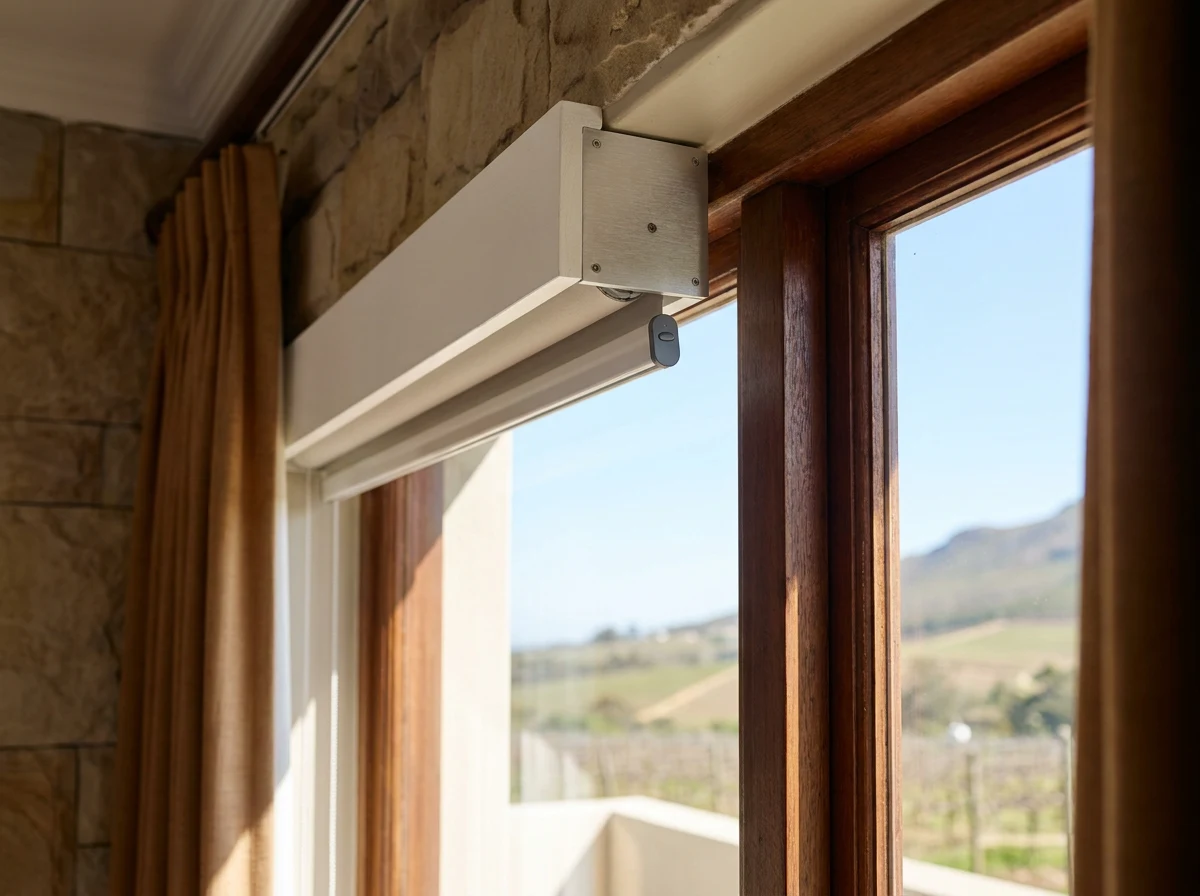
- Optional cassette pelmet that hides the rolled tube, colour-matched to your frames
Roller questions
Asked at almost every measure
Will sunscreen fabric give me privacy at night?
Not on its own. Sunscreen relies on the light being brighter outside than in — after dark that flips, and the fabric becomes see-through from the street or garden. For any room used at night, pair it with blockout on a double bracket or choose a light-filter fabric instead.
Which openness do I want against the glare off the bay?
Openness is the percentage of the weave left open — the lower the number, the tougher it is on glare and the dimmer the view. Bay-facing glass here usually lands on 3%; a softer aspect can carry 5% and keep more sparkle in the view. It's exactly the decision we settle with samples held up at your window, not from a chart.
Can one blind cover my full sliding-door opening?
Up to a point — beyond roughly three metres of fabric width, one oversized blind starts to sag and track badly. Past that we quote a linked pair, usually motorised so both halves move together with no chains in the walkway. The measure tells us which side of the line your opening falls.
Do roller blinds cut heat, or only glare?
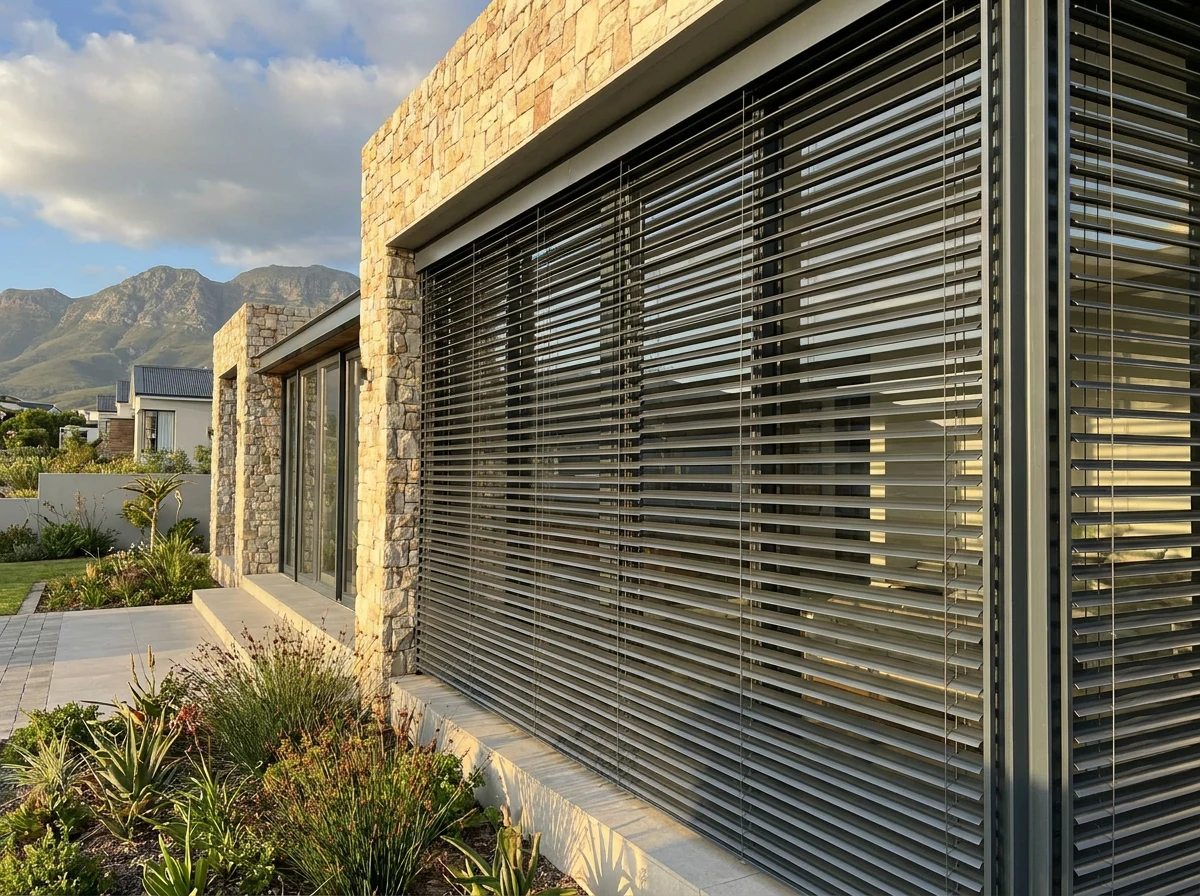
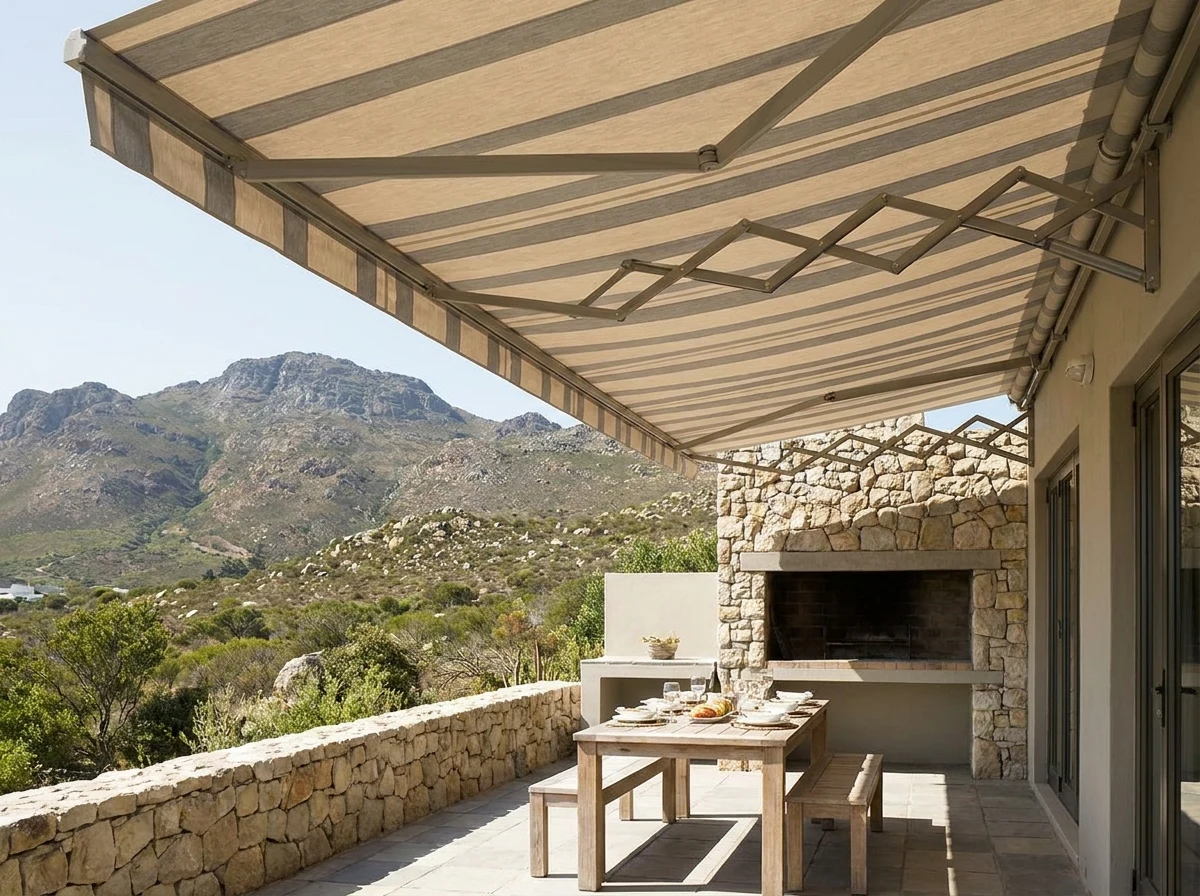
Both, honestly ranked: any interior blind blocks glare well and heat only partly, because the sun has already come through the glass. Metallised backings and tighter weaves help. If a west room is genuinely overheating, exterior shading — external venetians or an awning — beats any interior fabric, and we'll say so at the measure.
Same visit
Worth looking at while we're there
What it costs
Roller blind pricing in the basin
Per square metre installed, a roller wound by chain, in solid cloth, open mesh or a light-filter, comes to about R1,000 to R1,600 per square metre. A basic blockout occupies the bottom; a close-weave sunscreen; a tight-openness sunscreen for the mountain-facing glass, or a twin blind carrying mesh and solid cloth together, sits at the upper. Add a motor and it becomes R2,500 up to R3,800 for every square metre, which takes in the drive, the control and the commissioning.
They are there to help you budget, and they are not a quote. Small windows carry a minimum charge, because the hardware and the fitting labour barely change with the opening. Every window on the house is costed by itself at the measure and given to you on paper.
Beyond Somerset West
The same measure, up and down the basin
Erinvale to the beachfront and up the R44 to the winelands — one consultant, one fabric range, one written per-window quote wherever the house is.
Ready when you are
One visit settles all of it.
Fabric, openness, control and the price per window — decided at your own glass, in your own light. Book the free measure and it's done.
Book my free measure